A Widespread but Undertreated Condition
Hearing loss is among the most common chronic health conditions in the United States. According to the National Institute on Deafness and Other Communication Disorders (NIDCD), approximately 28.8 million American adults could benefit from the use of hearing aids. Yet research consistently shows that among those who could benefit, fewer than one in three adults over 70, and fewer than one in six adults aged 20 to 69, have ever used one.
The gap between need and treatment is not simply a matter of awareness. It reflects a convergence of cost, stigma, limited access to audiological care, and the gradual nature of hearing loss itself, which makes it easy to dismiss or adapt around in its early stages.
How Presbycusis Develops
Age-related hearing loss, known clinically as presbycusis, is the most common form of sensorineural hearing loss. It develops gradually, typically affecting both ears symmetrically, and disproportionately impacts the ability to hear higher-frequency sounds, the range that carries much of the information in human speech.
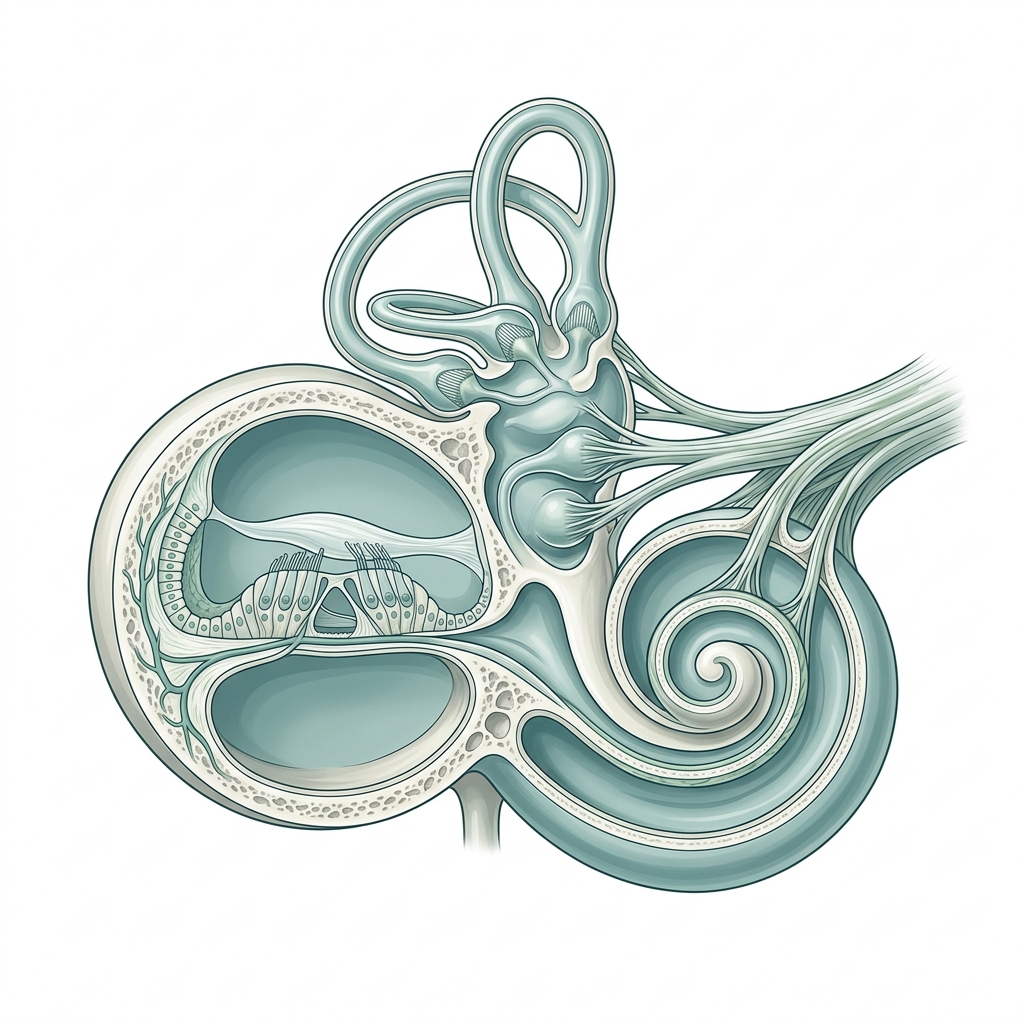
The underlying mechanism centers on the cochlea, a spiral-shaped structure in the inner ear filled with fluid and lined with thousands of microscopic sensory cells known as hair cells. These cells translate mechanical sound vibrations into electrical signals that travel via the auditory nerve to the brain. Over time, cumulative exposure to noise, reduced blood supply, changes in the stria vascularis (the tissue that maintains the chemical balance of cochlear fluid), and the natural aging of cellular structures lead to the gradual death of these hair cells.
Unlike many other cell types in the body, cochlear hair cells in mammals do not regenerate. Humans are born with roughly 15,000 of them per ear. As they are lost, the range and clarity of audible sound narrows, often so slowly that the person is unaware of the change for years.

The Research on Cognitive Decline
Over the past two decades, a growing body of research has examined whether hearing loss is associated with broader cognitive and neurological changes, beyond its direct effects on communication.
A landmark 2011 study by Frank Lin and colleagues at Johns Hopkins University, published in Archives of Neurology, followed 639 adults over nearly 12 years and found that individuals with hearing loss at the study's outset were significantly more likely to develop dementia during the follow-up period. The risk increased with the severity of hearing loss: those with mild hearing loss had nearly twice the risk of dementia compared to those with normal hearing, while those with severe loss had five times the risk.
"Hearing loss is independently associated with accelerated cognitive decline and incident cognitive impairment in community-dwelling older adults."
Lin et al., JAMA Internal Medicine, 2013
A 2013 study by the same research group, published in JAMA Internal Medicine, tracked 1,984 older adults over six years and found that those with hearing loss experienced cognitive decline 30 to 40 percent faster than those with normal hearing, even after controlling for other factors such as age, diabetes, and hypertension.
In 2014, Gurgel and colleagues at the University of Utah confirmed these findings in a large population-based study, reporting that individuals diagnosed with hearing loss had a significantly higher rate of dementia diagnosis during a ten-year follow-up period.
It is important to note that these studies demonstrate association, not causation. Researchers have proposed several mechanisms to explain the link. One theory, known as the "cognitive load" hypothesis, suggests that when the brain must devote more resources to processing degraded auditory signals, fewer resources are available for memory and other cognitive functions. Another points to social isolation: hearing loss makes conversation difficult, which may lead people to withdraw from social engagement, a well-established risk factor for cognitive decline. A third theory suggests shared underlying neuropathological processes may independently affect both hearing and cognition.
The 2020 Lancet Commission on dementia prevention, intervention, and care identified hearing loss as the single largest modifiable risk factor for dementia, estimating that addressing hearing loss could potentially prevent up to 8 percent of dementia cases worldwide.
Social and Emotional Impact
Beyond its cognitive associations, untreated hearing loss carries documented consequences for social and emotional well-being. Difficulty following conversations, particularly in noisy environments such as restaurants, family gatherings, or workplaces, can lead to frustration, fatigue, and gradual withdrawal from social situations.

Research published in the Journal of the American Geriatrics Society has shown that older adults with hearing loss report higher rates of loneliness, depression, and reduced quality of life compared to their peers with normal hearing. Partners and family members also report significant strain, as they frequently must repeat themselves, increase the volume of shared media, or interpret conversations on behalf of the person with hearing loss.
The emotional dimension is often underappreciated. Many people with gradual hearing loss describe a sense of being "left out" of conversations rather than unable to hear. The social cues carried by speech, such as humor, irony, and emphasis, are often the first things lost, creating a subtle but persistent barrier to meaningful connection.
The Cost Barrier
For decades, one of the primary barriers to treating hearing loss has been cost. According to a 2015 report by the President's Council of Advisors on Science and Technology (PCAST), the average price for a pair of prescription hearing aids in the United States was approximately $4,672. Prices at some clinics exceeded $6,000. Traditional Medicare did not cover hearing aids, and many private insurance plans offered limited or no coverage.
The cost reflected not only the devices themselves but also the bundled model of hearing care, in which the price of the hearing aid typically included the audiological evaluation, fitting, adjustments, and follow-up visits. While this model ensured professional oversight, critics argued it created a significant financial barrier that prevented millions of people from accessing treatment.
The OTC Hearing Aid Rule
In August 2022, the U.S. Food and Drug Administration finalized a rule creating a new category of over-the-counter (OTC) hearing aids. The rule, which took effect in October 2022, allows adults aged 18 and older with perceived mild to moderate hearing loss to purchase certain hearing aids directly from retailers and online, without a medical exam, audiological evaluation, or professional fitting.
The regulatory change was years in the making. It originated with the Over-the-Counter Hearing Aid Act of 2017, which was passed with bipartisan support and signed into law as part of the FDA Reauthorization Act. The legislation directed the FDA to establish regulatory standards for a new class of hearing aids available without a prescription.
The rule's proponents argued that it would increase competition, drive down costs, and make hearing aids accessible to millions of Americans who had gone without due to financial constraints. Early reports following the rule's implementation have shown new devices entering the market at substantially lower prices than traditional prescription hearing aids, with some options available for under $1,000 per pair.

What to Consider When Evaluating Hearing Aids
Whether pursuing OTC or prescription options, audiologists and hearing health professionals generally recommend considering several factors when evaluating a hearing aid.
Degree and Type of Hearing Loss
OTC hearing aids are designed for mild to moderate hearing loss. Individuals with severe or profound hearing loss, asymmetric hearing loss, or sudden-onset hearing loss should consult a hearing health professional, as these patterns may indicate underlying medical conditions that require evaluation.
Sound Processing Features
Modern hearing aids use digital signal processing to amplify sound selectively. Key features to evaluate include directional microphones (which can help focus on speech in noisy environments), feedback cancellation, noise reduction algorithms, and the number of frequency channels available for adjustment.
Fit and Comfort
A hearing aid that fits poorly will likely go unused. Prescription devices are typically custom-fitted by an audiologist, while OTC devices generally come with multiple ear tip sizes and rely on the user to achieve a proper fit. Comfort over extended wear is an important practical consideration.
Trial Periods and Return Policies
Most reputable hearing aid providers, whether selling OTC or prescription devices, offer trial periods during which the device can be returned for a refund. This is important because adjusting to amplified sound takes time, and a device that seems uncomfortable on day one may work well after a period of adaptation, or vice versa.
Professional Support
Even with OTC availability, many individuals benefit from a baseline hearing evaluation with a licensed audiologist. A comprehensive audiogram provides detailed information about the type, degree, and configuration of hearing loss, which can inform device selection and realistic expectations for outcomes.
Looking Ahead
Several developments in hearing research and technology may further shape the landscape in coming years.
The ACHIEVE study (Aging and Cognitive Health Evaluation in Elders), a large randomized controlled trial conducted at multiple sites across the United States, was designed to test whether hearing intervention can reduce cognitive decline in older adults. Published results from this trial have provided important evidence about the relationship between hearing treatment and cognitive outcomes, particularly in populations at elevated risk for cognitive decline.
In parallel, research into hair cell regeneration continues. Several research groups and biotech companies are investigating compounds and gene therapies that could potentially stimulate the regeneration of cochlear hair cells in mammals, a biological capacity that exists in birds and fish but was long thought absent in humans. While clinical applications remain years away, early-stage trials have shown preliminary signs of feasibility.
On the technology front, hearing aid manufacturers continue to improve digital signal processing, connectivity features, and miniaturization. Integration with smartphones, real-time language translation, and machine learning algorithms that adapt to a user's listening environments represent areas of active development.
Perhaps most importantly, growing public and scientific attention to hearing health may help reduce the stigma that has long discouraged people from seeking treatment. As research continues to clarify the broader health implications of untreated hearing loss, the case for early evaluation and intervention has only grown stronger.